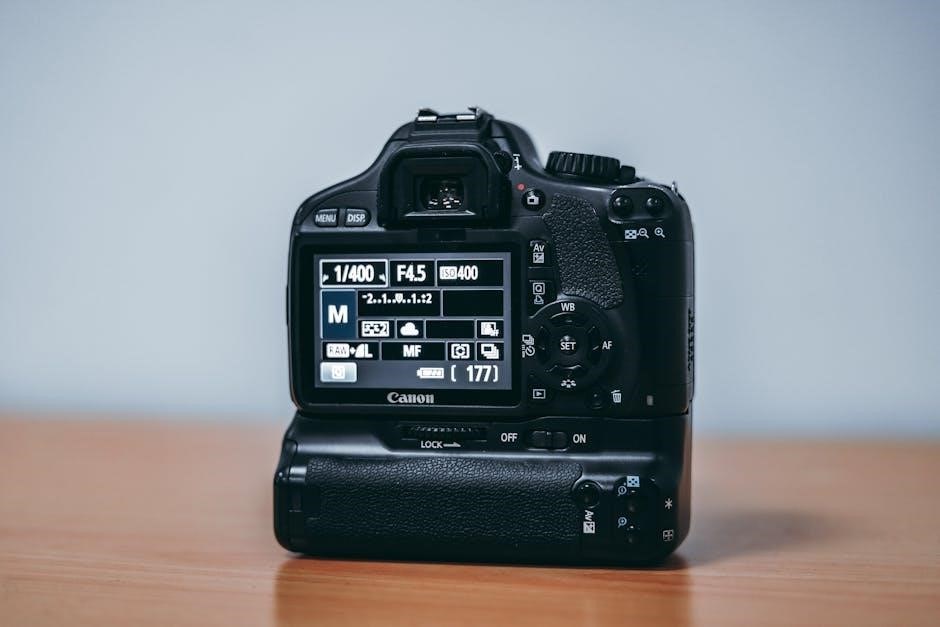
Welcome! This guide unlocks your Canon Rebel T3’s potential, offering a beginner-friendly manual to navigate its features and capture stunning photos and videos.
What is the Canon Rebel T3?
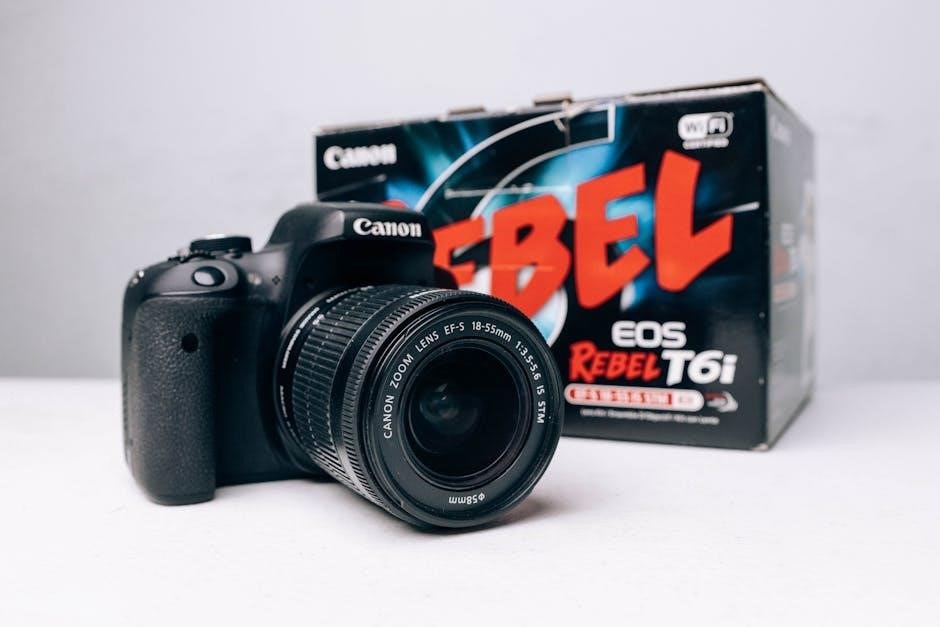
The Canon Rebel T3 (also known as the EOS 1100D) is an entry-level Digital Single-Lens Reflex (DSLR) camera, renowned for its user-friendly design and impressive image quality. Released initially in 2011, it remains a popular choice for beginners venturing into the world of photography. This camera provides a significant step up from point-and-shoot cameras, offering greater control over settings and the ability to interchange lenses.
Essentially, the Rebel T3 empowers users to explore creative photography without the complexities often associated with professional-grade equipment. It’s a fantastic tool for learning photographic principles and developing your skills. This manual will guide you through everything you need to know to maximize your experience with this capable camera.
Key Features and Specifications
The Canon Rebel T3 boasts a 12.2-megapixel APS-C CMOS sensor, delivering detailed and vibrant images. It features Canon’s DIGIC 4 image processor for fast and accurate processing. Video recording is supported at 720p HD resolution, offering a good starting point for videography. The camera includes a 3.0-inch LCD screen for composing shots and reviewing images.
Key specifications include an ISO range of 100-6400, a 9-point autofocus system, and a continuous shooting speed of 3 frames per second. It’s compatible with Canon EF and EF-S lenses, expanding creative possibilities. The Rebel T3 utilizes SD memory cards for storage, and operates on a Canon LP-E6 battery.
Getting Started: Initial Setup
Begin your photographic journey! This section guides you through the initial setup of your Canon Rebel T3, ensuring a smooth and successful start.
Unboxing and Component Check
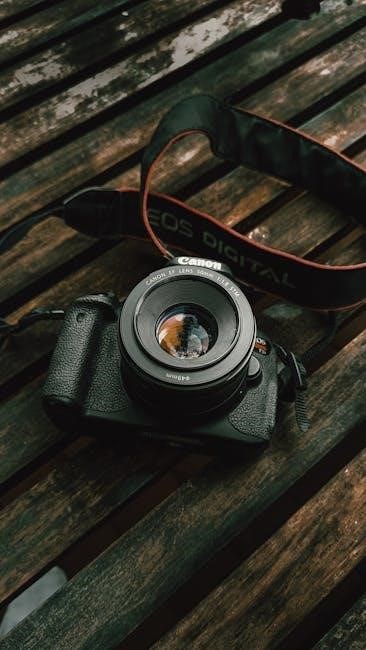
Carefully open the box and verify all included components. You should find the Canon Rebel T3 camera body, a kit lens (typically 18-55mm), a battery, a battery charger, a neck strap, a USB cable, and various manuals – including this user guide!
Inspect each item for any physical damage that may have occurred during shipping. Ensure the lens mount is secure and free of debris. The battery should be packaged separately. Confirm the presence of all cables and documentation.
Retain the original packaging for potential warranty claims or resale purposes. A complete component check now prevents issues later, ensuring you have everything needed to begin exploring your new camera’s capabilities.
Charging the Battery
Before first use, fully charge the Canon Rebel T3’s battery. Connect the battery to the provided charger and plug it into a standard wall outlet. The charger’s indicator light will illuminate, typically red while charging and green when complete.
Charging time varies, but generally takes around 1-3 hours. Avoid interrupting the charging process. Canon recommends using only the supplied charger to prevent damage to the battery.
A fully charged battery provides ample power for numerous shots and video recordings. Always ensure the battery is securely seated in both the charger and the camera. Proper battery care extends its lifespan and ensures reliable performance.
Inserting the Memory Card
The Canon Rebel T3 utilizes SD cards for storing photos and videos. Locate the memory card slot, typically on the side of the camera, often covered by a protective door. Gently open the door.
Insert the SD card with the label facing upwards and push it in until it clicks into place. Avoid forcing the card; ensure it’s oriented correctly. To remove the card, gently push it in once more to release it, then pull it out.
Formatting the card within the camera is recommended for optimal performance. This ensures compatibility and clears any previous data. Always eject the card safely before removing it from the camera.
Understanding the Camera Interface
Explore the controls! Familiarize yourself with the mode dial, menu system, and LCD screen to efficiently navigate and customize your Canon Rebel T3 settings.

The Mode Dial: Exploring Shooting Modes
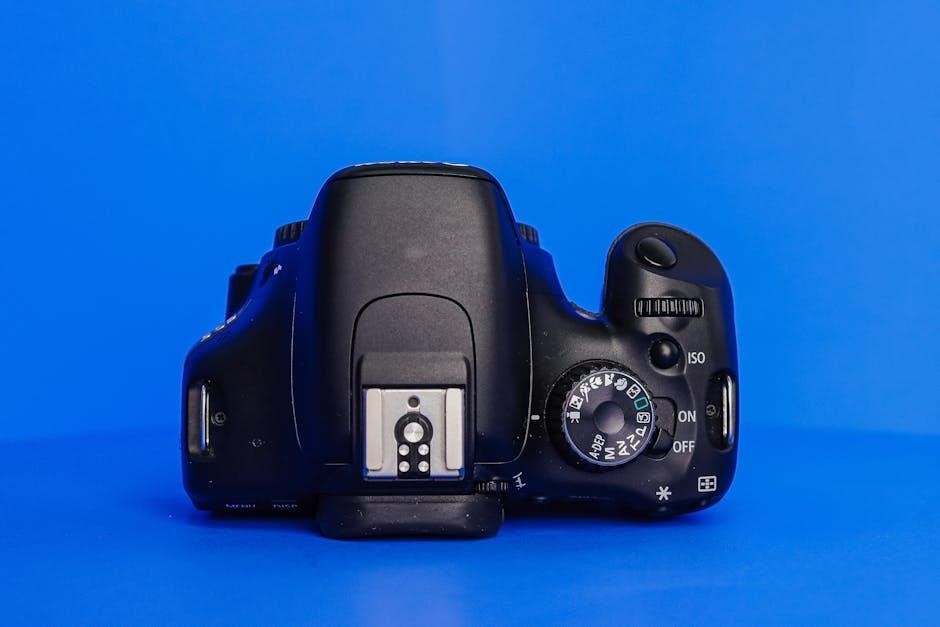
Mastering the dial is key! The Canon Rebel T3’s mode dial offers a variety of shooting options, catering to different skill levels and photographic scenarios. ‘Auto’ delivers fully automatic settings, perfect for beginners, while ‘Creative Auto’ allows some control over key parameters like depth of field.
‘Program’ (P) offers more flexibility, letting you adjust ISO, white balance, and picture styles. ‘Shutter Priority’ (Tv) lets you control shutter speed for motion blur or freezing action, and ‘Aperture Priority’ (Av) manages depth of field. ‘Manual’ (M) grants complete control over both aperture and shutter speed. Scene modes, like portrait, landscape, and sports, optimize settings for specific subjects. Finally, the movie mode initiates video recording.
Navigating the Menu System
The menu is your control center! Accessing the Canon Rebel T3’s menu is done via the ‘Menu’ button. It’s logically organized into several tabs, represented by icons: shooting settings, creative settings, playback settings, and setup.
Use the directional buttons to navigate through the options, and the ‘Set’ button to confirm your selections. Shooting settings control image quality, autofocus, and drive mode. Creative settings adjust picture styles, white balance, and auto lighting optimizer. Playback settings manage image review and deletion. Setup handles camera settings like date, time, and display options. Familiarize yourself with each tab for full control!
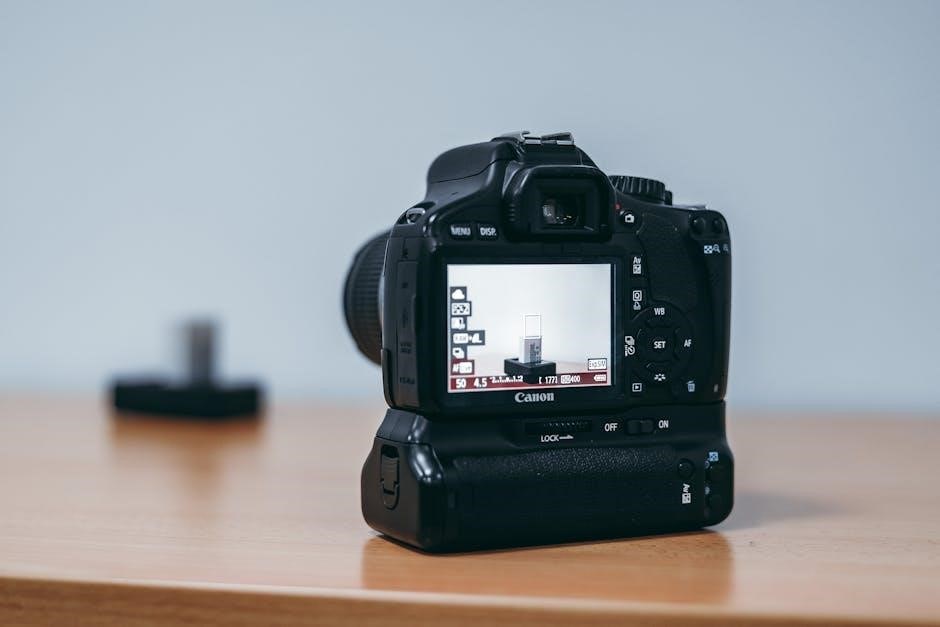
Understanding the LCD Screen
Your window to the world! The Canon Rebel T3’s LCD screen displays live view, playback images, and menu options. During live view, it shows a preview of your shot, allowing you to compose and check focus. When reviewing photos, use the zoom buttons to inspect details.
The LCD also provides crucial shooting information: battery level, shooting mode, aperture, shutter speed, and ISO. Press the ‘Info’ button to cycle through different information displays. Brightness can be adjusted in the setup menu for optimal viewing in various lighting conditions. Protect the screen with a protector to avoid scratches!
Basic Photography Techniques
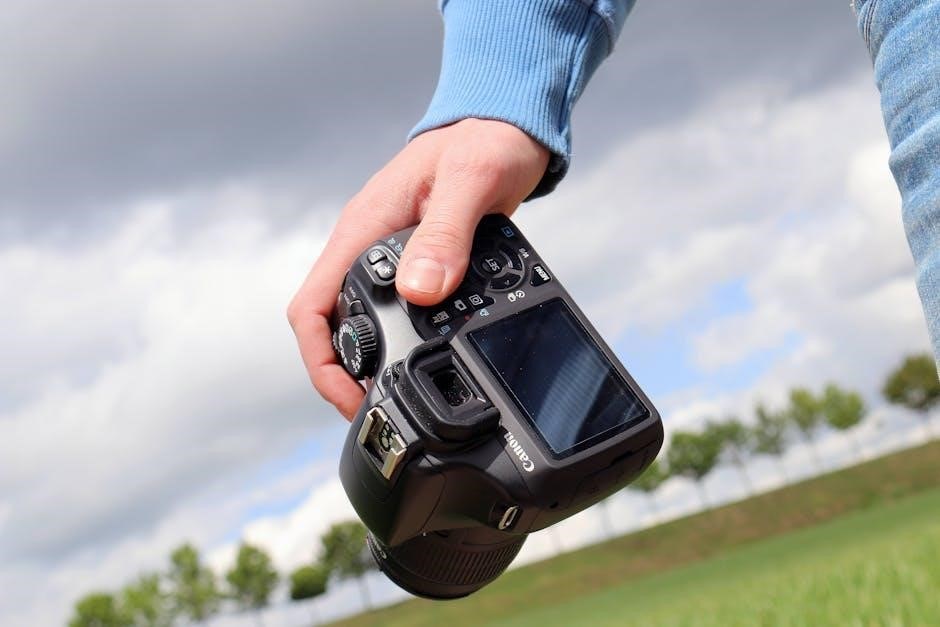
Master the fundamentals! Learn to control aperture, shutter speed, and ISO for creative control, and explore autofocus versus manual focusing techniques.
Aperture, Shutter Speed, and ISO
Understanding the Exposure Triangle: Aperture controls the lens opening, affecting depth of field – a wider aperture (lower f-number) creates a shallow depth of field, blurring the background, ideal for portraits. Shutter speed dictates how long the sensor is exposed to light; faster speeds freeze motion, while slower speeds allow more light in, but can cause blur.
ISO and Image Noise: ISO measures the sensor’s sensitivity to light. Lower ISO values (like 100) produce cleaner images, but require more light. Higher ISO values (like 3200) are useful in low light, but introduce more noise or grain. Balancing these three settings – aperture, shutter speed, and ISO – is crucial for achieving a properly exposed and visually appealing photograph. Experiment with different combinations to understand their effects on your images with your Canon Rebel T3.
Focusing Modes: Autofocus and Manual Focus
Autofocus (AF) Modes: The Canon Rebel T3 offers various autofocus modes. One-Shot AF is best for stationary subjects, locking focus when you half-press the shutter. AI Servo AF continuously tracks moving subjects, adjusting focus as they move. Select the appropriate mode based on your subject’s movement. The focus points can be selected automatically or manually for precise control.
Manual Focus (MF): For situations where autofocus struggles – low light or challenging subjects – switch to manual focus. Rotate the focusing ring on the lens until the image appears sharp on the LCD screen. Utilize Live View and zoom in for critical focus. Mastering both AF and MF will significantly enhance your photographic capabilities with the Rebel T3.
Shooting in Auto Mode vs. Manual Mode
Auto Mode: The Canon Rebel T3’s Auto mode simplifies photography, automatically selecting settings for aperture, shutter speed, and ISO. It’s ideal for beginners or quick snapshots, ensuring a properly exposed image in most situations. However, it offers limited creative control.
Manual Mode: For full control, switch to Manual (M) mode. This allows you to independently adjust aperture, shutter speed, and ISO, enabling you to achieve specific creative effects. While requiring more knowledge, Manual mode unlocks your artistic vision. Experimenting with these settings is key to mastering the Rebel T3 and developing your photographic style.
Advanced Photography Features

Explore creativity! Dive into scene modes, filters, and white balance adjustments on your Canon Rebel T3 for truly personalized and professional-looking images.
Using Scene Modes for Specific Situations
Canon’s Scene Modes simplify complex settings, allowing you to quickly optimize your Rebel T3 for various shooting environments. Portrait mode blurs the background, emphasizing your subject. Landscape mode maximizes depth of field, ensuring sharp details throughout the scene. Sports mode utilizes a faster shutter speed to freeze action, capturing dynamic moments with clarity.
Night mode increases ISO and uses a slower shutter speed for low-light photography, while Children mode prioritizes faster autofocus for capturing energetic kids. Close-up mode is ideal for macro photography, revealing intricate details of small subjects. Experiment with each mode to understand how they impact your images and discover the best settings for different scenarios, enhancing your photographic storytelling.
Creative Filters and Effects
The Canon Rebel T3 offers a range of creative filters to instantly transform your photos with unique artistic styles. Soft Focus adds a dreamy, ethereal quality, while Monochrome converts images to black and white for a classic look. Sepia creates a vintage aesthetic, reminiscent of old photographs. Vivid Color enhances saturation, making colors pop with intensity.
Toy Camera simulates the look of a plastic lens camera, adding vignetting and color distortion. Fish-eye creates a distorted, wide-angle effect. Explore these filters to add personality and flair to your images, experimenting with different styles to find your signature look and elevate your creative expression beyond standard photography.
Understanding White Balance
White balance ensures accurate color representation in your photos, correcting for different lighting conditions. The Rebel T3 offers Auto White Balance (AWB), which generally performs well, but can sometimes be inaccurate. Preset modes like Daylight, Cloudy, Fluorescent, and Tungsten are available for specific scenarios.
Custom White Balance allows you to manually set the white point for precise color accuracy. This is useful in challenging lighting situations where AWB struggles. Incorrect white balance results in color casts – images appearing too blue, yellow, or green; Mastering white balance is crucial for achieving natural-looking and visually appealing photographs;
Video Recording with the Rebel T3
Capture life’s moments in motion! The Rebel T3 records videos with ease, offering various resolutions and frame rates for diverse creative projects.
Video Resolution and Frame Rates
Understanding your options is key to quality video. The Canon Rebel T3 primarily records in standard definition (SD) video, offering a maximum resolution of 720p at 30 frames per second. While not boasting 4K capabilities like newer models, this resolution is perfectly adequate for sharing online or viewing on smaller screens.
The 30fps frame rate provides smooth motion, suitable for most everyday video scenarios. Lower frame rates, though not directly selectable on the T3, can sometimes be achieved through editing software, but may result in a less fluid appearance. Experimenting with these settings, within the camera’s limitations, will help you achieve the desired look for your videos. Remember to consider your intended viewing platform when choosing a resolution.
Using the Built-in Microphone
Capturing clear audio is crucial for compelling videos. The Canon Rebel T3 features a built-in microphone, conveniently located on the camera body. While functional for basic recording, its quality is limited, particularly in noisy environments. Be mindful of wind noise, as it can significantly degrade audio quality – consider shielding the microphone during outdoor shoots.
For improved sound, position yourself closer to the subject. The internal microphone is mono, meaning it records sound from all directions equally. For better control, explore external microphone options, which connect via the 3.5mm microphone jack, offering superior audio fidelity and directional recording capabilities. Experiment to find what works best for your needs!
Basic Video Editing Tips
Enhance your Rebel T3 footage with simple editing techniques! Start with trimming unwanted sections – remove shaky starts and awkward pauses for a polished look. Most video editing software allows for basic color correction; adjust brightness and contrast to improve visual appeal. Adding transitions between clips creates a smoother flow, avoiding jarring cuts.
Don’t underestimate the power of audio adjustments. Normalize audio levels to ensure consistent volume throughout your video. Consider adding background music, but keep it subtle so it doesn’t overpower the primary sound. Free editing software options are readily available, offering a great starting point for beginners.
Maintenance and Troubleshooting
Keep your Rebel T3 performing optimally! Regular cleaning and understanding common issues will ensure longevity and prevent frustrating interruptions to your shooting.
Cleaning the Sensor and Lens
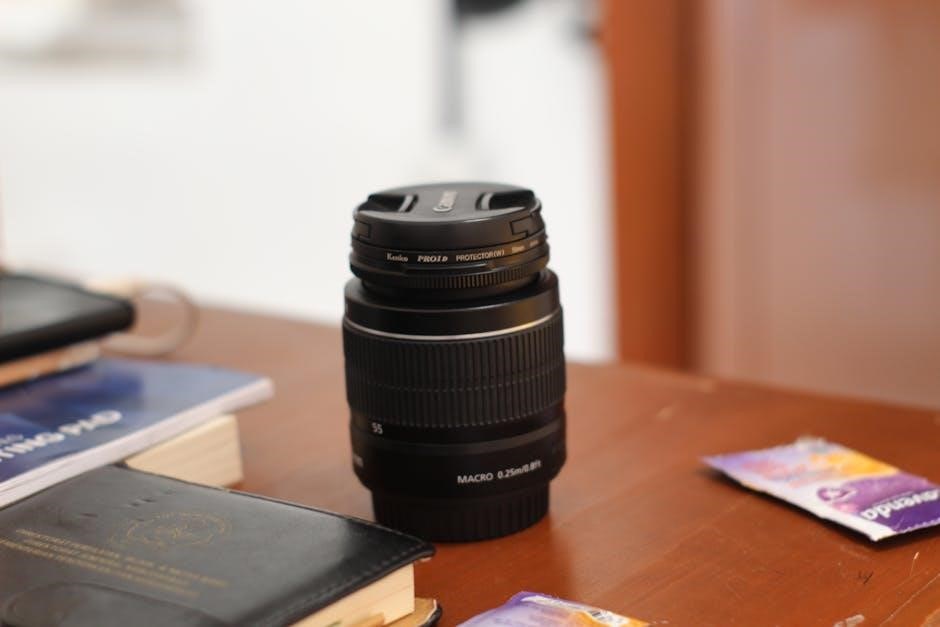
Maintaining pristine image quality requires regular cleaning. Dust on the sensor or lens significantly impacts photos. For the lens, use a blower to remove loose particles, followed by a microfiber cloth with lens cleaning solution – apply solution to the cloth, never directly to the lens.
Sensor cleaning is more delicate. Utilize the Rebel T3’s built-in sensor cleaning function first. If persistent dust remains, consider a professional cleaning service. Attempting manual sensor cleaning without proper tools and knowledge risks damage. Always prioritize caution and professional assistance for sensor maintenance to avoid costly repairs and ensure optimal image clarity.
Common Problems and Solutions
Encountering issues is normal; here are some solutions. If the camera won’t turn on, ensure the battery is fully charged and correctly inserted. For blurry images, check focus settings and stabilize the camera. Error messages often indicate specific problems – consult the manual for decoding.
Memory card errors can be resolved by reformatting the card (back up data first!). If the LCD screen displays incorrectly, try resetting the camera to factory defaults. When facing persistent issues, Canon’s support website offers extensive troubleshooting guides and FAQs. Don’t hesitate to seek professional help if problems persist.
Battery Care and Storage
Maximize your battery’s lifespan with proper care. Avoid fully discharging the battery before recharging, as this can reduce its capacity over time. Store the battery in a cool, dry place, away from direct sunlight and extreme temperatures. It’s best to store it partially charged (around 40-60%) for long periods of inactivity.
Never leave the battery in extremely hot environments, like a car on a sunny day. Use only the Canon-supplied charger to prevent damage. Regularly check the battery terminals for corrosion and clean them gently if needed. Proper battery maintenance ensures reliable performance and extends its overall life.
Resources and Further Learning
Expand your knowledge! Explore Canon’s website, online tutorials, and vibrant communities for tips, tricks, and accessories to enhance your Rebel T3 experience.
Canon’s Official Website and Support
Your primary resource is Canon’s official website. Here, you’ll find the complete Canon Rebel T3 manual available for download in PDF format, ensuring you always have access to detailed instructions. Beyond the manual, Canon provides a comprehensive support section with frequently asked questions (FAQs) addressing common issues and troubleshooting steps.
Drivers and software updates are also readily available, crucial for optimal camera performance and compatibility with your computer. Canon’s online support extends to a knowledge base filled with articles and tutorials, covering everything from basic operation to advanced techniques. You can also connect with Canon support representatives via online chat or phone for personalized assistance, should you encounter any difficulties. Registering your Rebel T3 on the Canon website unlocks additional benefits and support options.
Online Tutorials and Communities
Expand your learning beyond the manual with a wealth of online resources. YouTube is brimming with Canon Rebel T3 tutorials, covering everything from beginner basics to advanced photography and videography techniques. Websites like Udemy and Skillshare offer structured courses for a more in-depth learning experience.
Engage with fellow Rebel T3 users in online communities and forums. Platforms like Reddit (r/CanonRebel) and photography-specific forums provide spaces to ask questions, share your work, and receive feedback. These communities are invaluable for troubleshooting, discovering new tips, and staying inspired. Don’t hesitate to search for specific issues – chances are someone else has already encountered and solved them!
Recommended Accessories for the Rebel T3
Enhance your Rebel T3 experience with these helpful accessories. A versatile tripod provides stability for sharp images and smooth videos, especially in low light. An extra battery ensures you won’t miss crucial shots during extended shooting sessions. Consider a camera bag for safe transport and protection of your gear.
Expand your creative possibilities with additional lenses. A 50mm prime lens is excellent for portraits with beautiful bokeh, while a wide-angle lens captures expansive landscapes. An external flash offers more control over lighting than the built-in flash. Memory cards with faster write speeds are crucial for video recording and burst mode photography.