
Students seeking solutions find Stoichiometry Worksheet Answers PDFs on Chemistry LibreTexts and Chem Not Cheem. LibreTexts offers downloadable, annotated problem sets covering mole‑to‑mole, limiting reactant, and yield calculations. Chem Not Cheem supplies concise Q&A sheets with worked examples.
Educational Benefits
Stoichiometry worksheet answers PDFs serve as a pivotal resource for chemistry learners, offering instant verification of problem solutions and reinforcing conceptual understanding. By presenting step‑by‑step solutions, these PDFs allow students to trace the logic behind mole‑to‑mole conversions, limiting‑reactant determinations, and percent‑yield calculations. The clarity of the worked examples helps demystify complex stoichiometric relationships, enabling learners to internalize the systematic approach required for accurate quantitative analysis.
Stoichiometry worksheet answers PDFs serve as a pivotal resource for chemistry learners, offering instant verification of problem solutions and reinforcing conceptual understanding. By presenting step‑by‑step solutions, these PDFs allow students to trace the logic behind mole‑to‑mole conversions, limiting‑reactant determinations, and percent‑yield calculations. The clarity of the worked examples helps demystify complex stoichiometric relationships, enabling learners to internalize the systematic approach required for accurate quantitative analysis.
Stoichiometry worksheet answers PDFs serve as a pivotal resource for chemistry learners, offering instant verification of problem solutions and reinforcing conceptual understanding. By presenting step‑by‑step solutions, these PDFs allow students to trace the logic behind mole‑to‑mole conversions, limiting‑reactant determinations, and percent‑yield calculations. The clarity of the worked examples helps demystify complex stoichiometric relationships, enabling learners to internalize the systematic approach required for accurate quantitative analysis
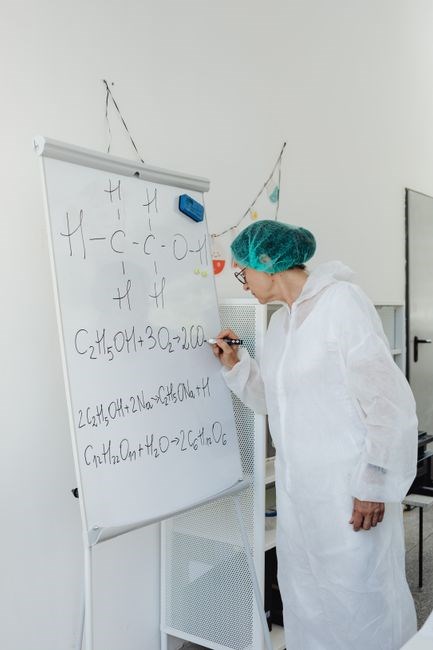
Key Sources and Formats
Key resources are Chemistry LibreTexts PDFs, offering detailed worksheets, and Chem Not Cheem answer sheets. Both formats give clear, step‑by‑step solutions, helping students verify calculations and master stoichiometric concepts. Students can download PDFs for study
Chemistry LibreTexts PDFs
Students and instructors frequently turn to Chemistry LibreTexts for comprehensive, peer‑reviewed stoichiometry worksheets that include fully worked answer keys. The PDFs are organized by chapter, with each problem set containing a mix of mole‑to‑mole conversions, limiting‑reactant determinations, and percent‑yield calculations. The solutions are presented in a step‑by‑step format, highlighting key concepts such as the mole ratio, the use of Avogadro’s number, and the importance of unit consistency. Each worksheet is accompanied by a brief explanatory note that clarifies common pitfalls, such as misreading the balanced equation or incorrectly applying the stoichiometric coefficient. Because the PDFs are downloadable, they can be printed for classroom use or accessed on mobile devices for on‑the‑go review. The site’s search functionality allows users to locate specific topics—such as “combustion analysis” or “redox stoichiometry”—and instantly retrieve relevant worksheets. Additionally, PDFs are formatted for accessibility, with clear headings, numbered steps, and ample white space to aid visual learners. The answer keys are not merely final numbers; they include intermediate calculations, unit conversions, checks for dimensional analysis, ensuring that students understand the reasoning behind each result. By integrating these resources into homework assignments review sessions, educators can provide consistent, high‑quality practice that reinforces textbook concepts and prepares students for exams. Students share online.
Chem Not Cheem PDFs
On Chem Not Cheem, stoichiometry worksheet answers are compiled into concise PDFs that emphasize clarity. Each file contains a curated set of 10–15 problems covering mole‑to‑mole conversions, limiting‑reactant analysis, and percent‑yield calculations. Solutions are presented step‑by‑step, with explicit calculations and brief explanatory notes to aid understanding. Understanding. for students daily
These PDFs are downloadable in both standard and high‑contrast versions, ensuring accessibility for all learners. The high‑contrast option uses larger fonts and darker backgrounds, aiding students with visual impairments. Each file is searchable, allowing quick navigation to specific problems or keywords. Students can print worksheets for in‑class activities or review sessions, keeping material handy. now
Educators can embed these PDFs into LMS platforms like Canvas or Moodle, assigning them as supplemental reading or graded quizzes. The platform’s discussion forum lets students post questions about specific worksheet problems, while instructors provide clarifications or hints, fostering an interactive learning environment. Students link calculations to real‑world examples, deepening insight.
Students can also request new problem types via the site’s feedback form, ensuring the resource evolves with their learning needs. The PDFs remain free, with subscription required, making them accessible to student worldwide. By combining clear solutions, accessibility features, and community input, Chem Not Cheem provides a robust platform for mastering stoichiometry!!! today!!!!!!!

Problem Types Covered in Worksheets
Stoichiometry worksheets feature mole‑to‑mole conversions, limiting‑reactant determination, and percent‑yield calculations. Each PDF offers step‑by‑step solutions, highlighting key concepts and common pitfalls for clear mastery.
Calculator tips in precision.
Mole-to-Mole Calculations
Stoichiometry worksheets provide extensive practice on converting between moles of reactants and products. Students learn to use balanced equations, extract coefficients, and apply the mole‑to‑mole conversion factor. For example, a LibreTexts worksheet presents the reaction 2 H₂ + O₂ → 2 H₂O; the solution shows how 3 mol H₂ yields 3 mol H₂O, emphasizing that coefficients directly translate to mole ratios.
Key steps highlighted include: (1) balancing the equation; (2) identifying the desired product; (3) writing the ratio from the coefficients; (4) multiplying the given moles by the ratio. Worksheets often include multi‑step problems where intermediate compounds are involved, such as converting 5 mol C₂H₆ to CO₂ using the equation C₂H₆ + 3.5 O₂ → 2 CO₂ + 3 H₂O. The answer sheets detail each multiplication and unit cancellation to reinforce proper technique.
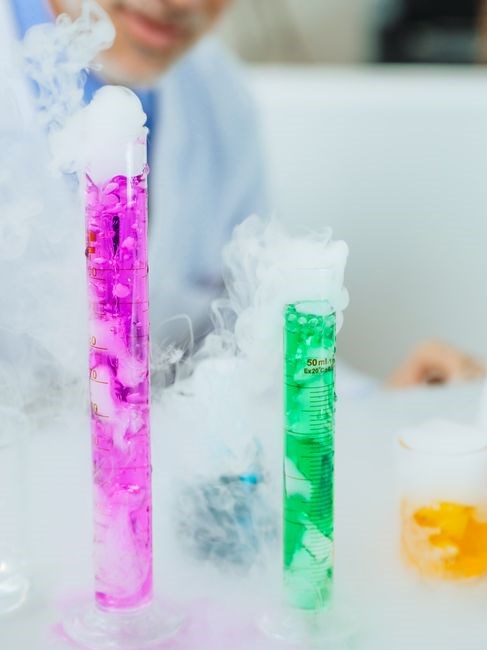
Common pitfalls—like misreading coefficients or forgetting to convert all reactants—are addressed with cautionary notes. The solutions also compare the calculated moles to theoretical limits, linking mole‑to‑mole work with limiting‑reactant concepts. This integrated approach ensures students can confidently tackle real‑world chemical calculations.
Students also practice scaling up reactions using mole‑to‑mole data. For instance, converting 0.75 mol Na₂CO₃ to CO₂ requires the balanced equation Na₂CO₃ → 2 Na⁺ + CO₃²⁻, followed by CO₃²⁻ + H₂O → H₂CO₃ → CO₂ + H₂O. The worksheet demonstrates stepwise multiplication, unit checks, and final answer of 0.375 mol CO₂. Such problems reinforce the importance of consistent units and careful arithmetic.
Advanced worksheets integrate stoichiometry with other concepts, such as gas laws. A common problem asks: “If 2.0 mol of N₂ reacts with 3.0 mol of H₂ at 25 °C and 1 atm, how many liters of NH₃ are produced?” The solution uses mole‑to‑mole ratios to find 4.0 mol NH₃, then applies the ideal gas law to convert to 88.8 L. By linking mole calculations to volume, students gain a holistic view of chemical quantitative reasoning.
Keep practicing daily!!

Limiting Reactant Problems
Stoichiometry worksheets from Chemistry LibreTexts and Chem Not Cheem feature detailed limiting‑reactant sections. A typical LibreTexts example shows the combustion of 4 g C₂H₆ with excess O₂. The solution first balances C₂H₆ + 3.5 O₂ → 2 CO₂ + 3 H₂O, then converts 4 g to 0.20 mol C₂H₆. Using the 1:3.5 ratio, the required O₂ is 0.70 mol, which exceeds the 0.50 mol supplied, making O₂ the limiting reactant. The answer sheet then calculates the maximum CO₂ produced (0.40 mol) and the remaining C₂H₆ (0.10 mol).

Another Chem Not Cheem worksheet presents a reaction of 0.30 mol Na₂SO₄ with 0.40 mol AgNO₃. Balancing 2 Na₂SO₄ + 4 AgNO₃ → 4 Ag₂SO₄ + 4 NaNO₃, the ratio of Na₂SO₄ to AgNO₃ is 1:2. The available AgNO₃ is insufficient to react with all Na₂SO₄, so AgNO₃ is limiting. The worksheet shows the step‑by‑step calculation of 0.60 mol Ag₂SO₄ produced and 0.00 mol Na₂SO₄ remaining.
These worksheets emphasize the “mole ratio” method: (1) balance the equation; (2) convert masses to moles; (3) divide each reactant’s moles by its coefficient; (4) the smallest quotient identifies the limiting reactant. The answer PDFs also include a verification step, comparing the theoretical yield to the actual yield to illustrate the impact of limiting reagents. By practicing these problems, students master the critical skill of determining which reactant controls the extent of a chemical reaction.
Common pitfalls highlighted include misidentifying the limiting reactant due to rounding errors or overlooking stoichiometric coefficients. The answer sheets provide a “check” column where students compare the calculated moles of each product with the theoretical maximum, ensuring consistency. This systematic approach reinforces accurate reasoning and reduces calculation errors.
Additionally, worksheets sometimes incorporate limiting‑reactant scenarios, such as reacting 1.5 mol H₂ with 0.8 mol O₂ to produce water, then using the produced water in an equilibrium. The solutions demonstrate how to carry forward the remaining reactants, adjust coefficients, and recalculate limiting conditions at each stage. This layered practice prepares students for complex real‑world engineering problems.

Yield Calculations
Stoichiometry worksheet answer PDFs from Chemistry LibreTexts provide step‑by‑step yield calculations. For example, a LibreTexts problem asks students to determine the percent yield of 3.00 g of product from a reaction that theoretically produces 4.50 g. The solution first balances the equation, converts reactant masses to moles, and calculates the theoretical yield in grams. The answer sheet then divides the experimental yield (3.00 g) by the theoretical yield (4.50 g) and multiplies by 100, giving a 66.7 % yield. The PDF also shows how to handle incomplete reactions by adjusting the limiting reactant and recalculating the theoretical yield.
In a Chem Not Cheem worksheet, students solve a problem where 0.25 mol of a reactant produces 0.30 mol of product experimentally, while the stoichiometric ratio predicts 0.40 mol. The answer PDF calculates the theoretical mass using molar mass, then finds the percent yield by comparing experimental mass to theoretical mass. It also includes a verification step: checking the ratio of moles to ensure consistency with the balanced equation.
Both resources emphasize the importance of significant figures and unit consistency. The answer PDFs provide a “check the units” column, reminding students to convert grams to moles or vice versa before performing the yield calculation. This systematic approach helps students avoid common mistakes such as using the wrong molar mass or misreading the balanced equation.
Boosts analytical reasoning!!.
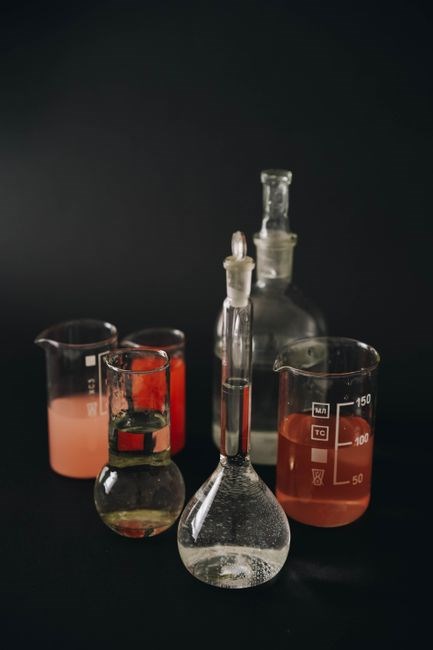
Tools and Strategies for Solving
Use the periodic table for atomic masses, a scientific calculator for unit conversions, and double‑check stoichiometric ratios. Verify each step, keep significant figures, and compare experimental results to theoretical values to confirm accuracy.! Use examples;
Using the Periodic Table
When tackling stoichiometry worksheet answers PDFs, the periodic table is your primary reference for atomic masses, valence electrons, and element symbols. Start by identifying each element in the chemical formula, then look up its standard atomic weight. Convert the given mass of a compound into moles by dividing by the sum of the atomic weights of its constituent atoms. For example, if a worksheet asks for the moles of NaCl in a 58.44‑g sample, you locate sodium (Na) at 22.99 and chlorine (Cl) at 35.45, sum to 58.44, and divide 58.44 g by 58.44 g mol⁻¹ to get 1 mol. This approach ensures accurate mole‑to‑mole conversions, which are critical for determining limiting reactants and theoretical yields. Additionally, the periodic table’s group and period information helps you recognize common oxidation states, guiding the setup of balanced equations. Many worksheets include reactions where you must predict the products; knowing typical valence patterns (e.g., alkali metals + halogens → ionic salts) speeds up the process. Finally, keep a quick‑reference sheet of the most frequently used atomic weights to save time during timed exams. In advanced problems, you may need to use isotopic masses or average atomic weights; the periodic table often lists both. For reactions involving gases, remember to use the ideal gas law constants provided in the worksheet’s reference section. When working with empirical formulas, the periodic table assists in determining the simplest whole‑number ratio of atoms. By mastering these techniques, students can confidently solve any stoichiometry worksheet, turning complex calculations into systematic, error‑free steps. Practice by downloading the free PDF resources from Chemistry LibreTexts and Chem Not Cheem, which include annotated solutions that highlight the periodic table usage. Reviewing these examples reinforces the habit of cross‑checking each atomic mass, ensuring that no rounding errors compromise the final answer. Consistent use of the periodic table not only improves accuracy but also deepens conceptual understanding of how atomic composition drives chemical behavior. Remember that the periodic table is dynamic; new elements and updated atomic weights are periodically revised. Keeping your reference current ensures that your stoichiometry worksheet answers remain valid for future coursework and professional applications.
Scientific Calculator Tips
Stoichiometry worksheet answers PDFs often require precise arithmetic. A scientific calculator can help avoid rounding errors and speed up mole‑to‑mass conversions. First, store atomic masses of common elements in memory (e.g., press M+, type 22.99, label “Na”). Second, use fraction mode when dividing grams by atomic weight; this keeps the result exact until the final step. Third, take advantage of the calculator’s unit‑conversion feature to switch between grams, moles, and liters for gas‑phase problems. Many models allow you to set a custom conversion factor, so you can instantly convert 1 mol to 22.4 L at STP. Fourth, practice scientific notation for very large or very small numbers that appear in limiting‑reactant calculations; entering 1.23E‑3 instead of 0.00123 preserves significant figures. Fifth, chain calculations by storing intermediate results in memory and recalling them with the RCL button. Finally, use the calculator’s “recall” function to verify each step: after computing a product, multiply by a stoichiometric coefficient and compare the result with the worksheet’s answer. By mastering these techniques, students reduce common calculator mishaps such as accidental rounding, mis‑labeling memory slots, or forgetting to switch modes, ensuring that stoichiometry worksheet answers PDFs are solved accurately and efficiently. Consistent use of memory recall and unit‑conversion functions cuts calculation time by half, allowing students to double‑check results quickly. It also eliminates the need to re‑enter values, saving time and reducing the chance of transcription errors, and confusion for beginners in the process.

Avoiding Common Mistakes
When consulting stoichiometry worksheet answers PDFs from Chemistry LibreTexts or Chem Not Cheem, students frequently stumble over a handful of pitfalls. The first is misreading the balanced equation: a misplaced coefficient can flip the entire calculation, turning a 2:1 ratio into 1:2. Second, atomic masses must be taken from a reliable source—using outdated values from an old textbook can skew results by several percent. Third, unit conversion errors are common; for example, converting grams to moles without accounting for the correct molar mass or forgetting to convert liters of gas to moles using the ideal‑gas law at the specified temperature and pressure. Fourth, rounding too early in multi‑step problems erodes significant‑figure accuracy; keep intermediate results in full precision and round only at the final answer. Fifth, the limiting‑reactant determination often fails when the student assumes all reactants are present in excess; double‑check the stoichiometric ratio against the actual amounts. Sixth, percent‑yield calculations can be misapplied if the theoretical yield is incorrectly computed; verify that the theoretical yield matches the worksheet’s answer key before inserting it into the percent‑yield formula. Seventh, many students forget to check that the final units match the question’s requirement—grams, moles, liters, or percent. Finally, a common oversight is neglecting to verify the balanced equation’s conservation of mass; if the sum of reactant masses does not equal the sum of product masses, the equation is likely unbalanced. By systematically reviewing each step, cross‑checking with the answer key, and maintaining strict adherence to significant figures and units, students can avoid these frequent errors and achieve reliable results in stoichiometry worksheet answers PDFs. Check the key now today

Verification Techniques
To confirm the accuracy of stoichiometry worksheet answers PDFs, students can employ several systematic checks. First, re‑balance the chemical equation independently; any discrepancy with the answer key signals a potential error. Second, perform dimensional analysis on each conversion step—grams to moles, moles to grams, liters to moles—ensuring that all units cancel correctly. Third, use the ideal‑gas law (PV=nRT) for gas‑phase problems; plugging the worksheet’s answer back into the equation should satisfy the given conditions (temperature, pressure, volume). Fourth, cross‑validate the limiting‑reactant determination by calculating the reaction quotient Q and comparing it to the equilibrium constant K if the problem involves equilibrium. Fifth, calculate the theoretical yield using the stoichiometric ratio and compare it to the worksheet’s theoretical yield; a mismatch indicates a misapplied coefficient. Sixth, compute the percent yield by dividing the experimental yield by the theoretical yield and multiplying by 100; the result should match the worksheet’s percent yield within a reasonable margin of error (typically ±1 %). Seventh, perform a back‑calculation: start from the reported product amount, reverse‑solve for the reactant mass, and verify that it aligns with the initial amounts given. Finally, use a scientific calculator’s built‑in unit‑conversion feature to double‑check all numerical values. By layering these verification steps, students reduce the likelihood of propagating mistakes and gain confidence in the correctness of the stoichiometry worksheet answers PDFs; Use of section of Chemistry LibreTexts or Q&A guide on Chem Not Cheem for problems Check the key now today